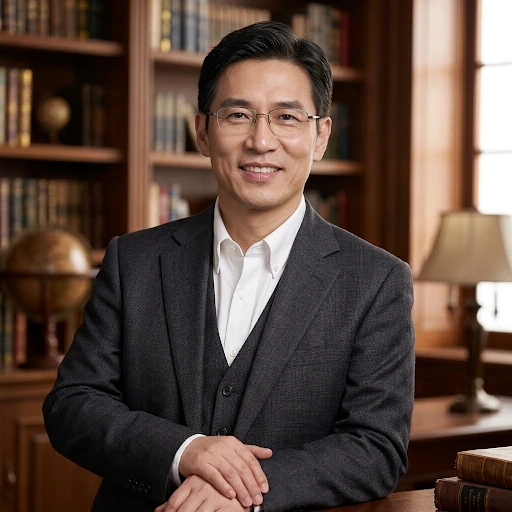
Lim Wei Jian
VerifiedIGCSEOnline IGCSE and A-Level economics tutor with finance specialism
Economics

Online IGCSE and A-Level economics tutor with finance specialism

Experienced economics tutor across SPM, IGCSE, A-Level, and STPM
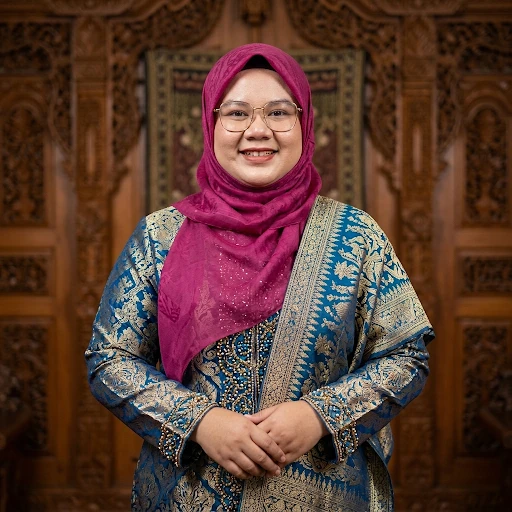
Dedicated KSSM and SPM Ekonomi tutor
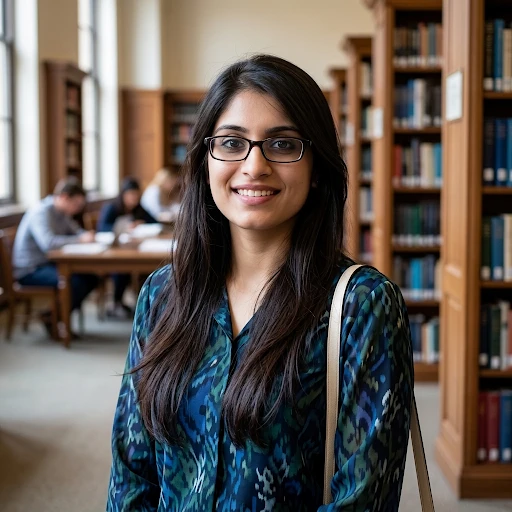
Online SPM and IGCSE economics tutor
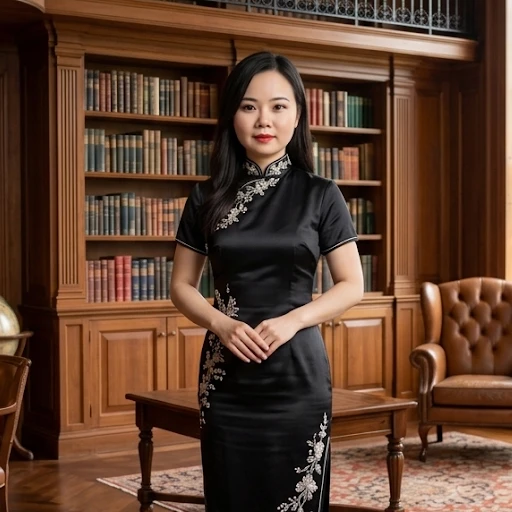
Senior online IGCSE and A-Level economics tutor

Yes, diagrams are often difficult because students try to memorise the finished picture without understanding what causes each curve to move. Our tutors start with the economic story behind the diagram: what changes, which curve is affected, why it shifts and what happens to equilibrium or another relevant variable. Students practise drawing, labelling and explaining diagrams rather than copying them. Support can cover demand and supply, elasticity, costs and revenues, market failure, aggregate demand and supply, exchange rates or other syllabus-specific diagrams.
School Economics uses mathematics, but it is not the same as studying mathematics or additional mathematics. Students may calculate percentages, elasticity, costs, revenue, index numbers or other economic measures depending on the syllabus. They also need to read tables, interpret changes and connect numerical evidence to economic theory. For many students, the harder part is explaining what a result means, not doing the arithmetic. Our tutors can practise calculations step by step, then move immediately into interpretation.
Yes, our tutors support the KSSM Ekonomi content taught across Forms 4 and 5. Form 4 includes scarcity, choice and opportunity cost, economic systems, market equilibrium, price elasticity, money and banking, individual income, consumption, production, costs, revenue, productivity and externalities. Form 5 covers government intervention, macroeconomic objectives, economic indicators, inflation, unemployment, fiscal and monetary policy, globalisation, international trade, balance of payments, and foreign exchange rates. Lessons can follow the student’s current school chapter or combine both years for SPM revision. Practice can include concepts, calculations, diagrams, structured responses and questions that require students to explain economic relationships clearly.
The revised STPM Ekonomi 944 syllabus will be used from Semester 1 of STPM 2026. It is organised into three papers: Mikroekonomi, Makroekonomi and Ekonomi Gunaan. The course expects students to understand economic concepts and theories, analyse information using tables, diagrams, and equations, interpret economic data, and critically discuss current issues. Our tutors can therefore go beyond content revision and work on how students use evidence, construct diagrams, perform calculations and develop written arguments. Because the revised structure differs from older STPM materials, we check the student’s current semester and syllabus before choosing past questions or notes. This helps prevent outdated topic organisation from shaping the revision plan.
STPM students need depth, accurate economic terminology and a clear link between theory and the question. Our tutors can help students plan before writing, identify the concept being tested, and organise points so one idea leads logically to the next. For data-based work, students practise reading tables or figures carefully, identifying trends, calculating where required and explaining what the evidence suggests. Essays can be reviewed for incomplete reasoning, irrelevant content and weak conclusions. We also encourage students to connect theory with Malaysian and international economic issues where the syllabus requires it. The aim is not to memorise entire essays but to build arguments that can adapt when the wording changes.
Cambridge IGCSE Economics 0455 develops economic terminology, data skills, analysis and evaluation across microeconomic and macroeconomic topics. For 2026 examinations, students take a multiple-choice paper and a structured-question paper. Our tutors can use topic practice to strengthen concepts first, then introduce MCQs, calculations, diagrams and structured responses. Students learn to eliminate weak options in multiple-choice questions and to identify the command word before writing longer answers. Cambridge is updating the syllabus for 2027–2029, including changes to content and assessment weighting, so we also check the student’s examination year. This prevents a student preparing for 2027 from relying entirely on a 2026 paper pattern.
Yes, Cambridge 9708 covers the price system, government intervention, international trade, exchange rates, employment, inflation, market failure, macroeconomic policy, economic growth and development, and more advanced microeconomic and macroeconomic analysis. Our tutors can support AS or full A Level students with multiple-choice technique, data-response questions, diagrams, quantitative skills and essays. A common difficulty is knowing enough theory but failing to organise it around the exact command word. Lessons, therefore, combine content with answer planning and timed practice. The current 2026–2028 syllabus also places attention on international and global issues, so revision follows the correct specification rather than relying on old topic lists alone.
IB Economics is built around microeconomics, macroeconomics and the global economy, with students applying theory to real economic issues. Our tutors can support both SL and HL with diagrams, calculations, policy analysis, real-world examples and structured evaluation. HL students also face additional depth and quantitative demands. Tuition can help students prepare for external assessment and understand what makes a well-developed economic argument. For the internal assessment, our tutors can explain the requirements, discuss economic concepts and give learning-focused feedback, but the commentary must remain the student’s own work. We do not write, rewrite or manufacture assessed submissions for students, because that would undermine both learning and academic integrity.
The three subjects overlap, but the types of thinking differ. Economics studies how scarce resources are allocated and how consumers, firms, governments and economies respond to incentives and policy. Business Studies focuses on decisions inside organisations, including marketing, finance, operations and people. Accounting focuses on recording, preparing, and interpreting financial information. A student who enjoys diagrams, current affairs, cause-and-effect reasoning and debating policy may prefer economics. Our tutors can support students already taking economics, but subject choice should also consider school options, university plans, and the student’s strengths. Choosing a subject solely because it’s believed to be “easier” can be misleading.
Yes, past papers show students how familiar economic ideas are tested in unfamiliar contexts. Mark schemes help clarify what is creditworthy, while examiner reports reveal recurring weaknesses such as generic application, incomplete analysis or unsupported judgement. Our tutors use these resources diagnostically rather than asking students to memorise model answers. A student may attempt a question first, review where the chain of reasoning breaks and then rewrite only the weak section before trying a similar problem. We also check that older papers still align with the current specification, as syllabus structures and assessment details can change. This keeps past-paper practice useful rather than turning it into repetition without reflection.
One lesson per week is often suitable for a student who understands most classroom teaching but needs regular help with difficult topics, essays, diagrams or exam questions. Two lessons per week may be more useful when several foundations are weak, an exam is approaching, or the student needs intensive practice in microeconomics and macroeconomics. More tuition is not automatically better if the student never practises independently between sessions. Our tutors can set focused work, such as a single diagram, a short calculation, or a timed paragraph, so the student can apply the method independently. Lesson frequency can then change as school assessments, mock examinations and final exams approach.
Online economics tuition at Mixt Academy Malaysia starts from RM60 per hour. The best plan depends on the student’s level, syllabus, and required support. An SPM student revising KSSM Ekonomi may need a different programme than an STPM, Cambridge A Level, or IB student working on higher-level analysis and evaluation. There are no long-term contracts, so families can choose regular weekly tuition, more intensive exam preparation or shorter support for a difficult unit. A free 30-minute trial is also available before regular lessons begin, giving the student and parent a chance to see whether the tutor’s explanations and lesson approach are a good fit.
