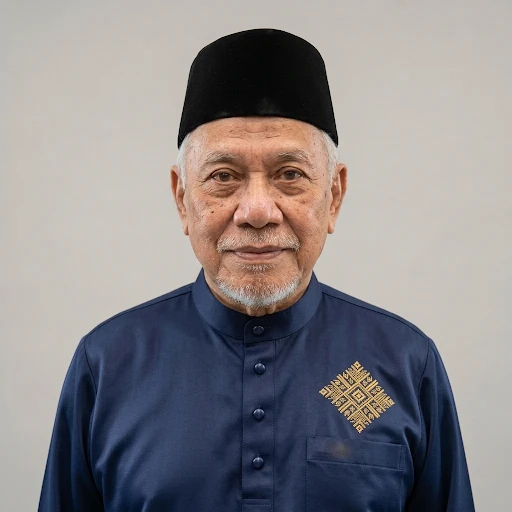
Muhammad Rafi
VerifiedKSSMSPM Pendidikan Islam tutor from a Tamil Muslim background
Islamic Education

SPM Pendidikan Islam tutor from a Tamil Muslim background

Experienced Pendidikan Islam tutor across SPM and STPM
Online SPM Pendidikan Islam tutor for upper secondary students

SPM Pendidikan Islam tutor with Quran recitation specialism

SPM Pendidikan Islam tutor with Syariah background

Knowing the topic is only one part of doing well in Pendidikan Islam. SPM and school assessments may ask students to explain, apply, analyse or evaluate Islamic teachings rather than repeat a definition. A student may remember a point from Akidah, Fiqh or Sirah but give an answer that is too general, incomplete or not connected to the situation in the question. Our tutors show students how to identify the task, select the relevant knowledge and develop an answer in the expected form.
Yes, SPM Pendidikan Islam is subject code 1223 and currently includes written papers 1 and 2, which assess Tilawah and Hafazan al-Qur’an and Hadith reading. Our tutors can support the written knowledge and application required for Form 4 and Form 5, as well as practical preparation where the tutor’s experience matches the student’s needs. Written lessons can cover understanding of the Qur’an and Hadith, Akidah, Fiqh, Sirah, Akhlak, and KBAT-style responses. Practical sessions can focus on prescribed recitation, memorisation or Hadith reading. We check the student’s current school materials and examination year because the safest preparation follows the syllabus and assessment information the school actually uses.
KBAT questions are difficult when students know the topic but are unsure how to apply it to a new situation. Our tutors teach students to identify the issue in the question, choose a relevant Islamic principle or lesson and explain the connection clearly. Instead of memorising a single fixed paragraph, students practise several situations on the same topic so they learn to adapt their knowledge. Feedback focuses on whether the answer actually addresses the scenario, develops the reason and reaches a sensible conclusion. This is useful because adding more facts does not automatically make a KBAT answer stronger. The student needs a clear chain of reasoning that shows understanding and application.
We can include Qur’an recitation when it forms part of the student’s Pendidikan Islam syllabus or SPM practical preparation, and when we have a tutor with suitable experience. We may also reinforce basic Tajwid where it directly supports correct recitation. However, a dedicated Qur’an or advanced Tajwid programme is not automatically the same service as academic Pendidikan Islam tuition. Families who primarily want Qur’an reading, Tajwid, Tahfiz, or memorisation beyond the school syllabus should state this clearly so we can determine whether an appropriate tutor is available. Keeping the goals separate helps the student receive the right type of lesson rather than using school exam time for material that belongs to a different learning programme.
Yes, repetition is important for memorisation, but students also benefit from a clear routine. Our tutors can help break prescribed passages into manageable sections, check accurate reading before memorisation, use cumulative review and identify where the student repeatedly hesitates. The learner can then practise independently between lessons instead of starting from the beginning each time. For SPM, the focus should remain on the prescribed material and the school’s assessment requirements. A tutor can guide the process, but regular practice outside lessons is essential because memorisation cannot be compressed into a single weekly session. The aim is reliable recall with correct reading, not short-term memorisation that disappears immediately after practice.
Yes, lower-secondary tuition can strengthen understanding of the Qur’an and Hadith, Akidah, Fiqh, Sirah, and akhlak, as well as the written skills expected at the student’s level. This stage helps build a foundation before SPM because weaknesses in terminology, basic concepts, or written explanations can become more noticeable in Form 4 and Form 5. Our tutors can work with the student’s current textbook, exercises and school feedback, while revisiting earlier topics when necessary. A student who understands ideas orally but writes very short answers may need more practice expressing knowledge clearly. Another learner may need concept revision before exam technique. One-to-one tuition allows us to address those needs without forcing every student through the same revision sequence.
Support may be available for primary Pendidikan Islam, KAFA or UPKK learners where we have a tutor whose experience matches the student’s programme. Primary students may need help with basic Qur’an reading, Akidah, Ibadah, Sirah, Adab, Jawi, or other school subjects. At the same time, KAFA and UPKK may have their own subject structures and assessment expectations. Parents should share the exact year, school or KAFA programme and current materials before lessons begin. This is important because “Islamic Education” can refer to several different learning systems in Malaysia. Our tutors do not assume that national primary Pendidikan Islam, KAFA and UPKK are interchangeable. The lesson plan should follow the programme the child is actually studying.
Yes, we have tutors familiar with the qualification. Cambridge IGCSE Islamiyat 0493 develops knowledge and understanding of major Islamic beliefs, Qur’anic themes, the Prophet Muhammad, the early Muslim community, Hadith and Muslim beliefs and practices. Students also need to explain the importance of these areas, not just recall facts. Our tutors can use the current syllabus, past papers, and examiner-style questions to develop structured responses and evaluations. Cambridge states that 0493 is available only in Administrative Zones 2, 3, 4 and 5, so families should confirm that their school or examination centre offers the qualification before planning tuition around it.
Yes, depending on the school programme and tutor availability. TeacherOn’s Malaysian listings show demand for Islamic Studies taught in English and Malay, and international schools may use Cambridge qualifications or their own school-designed Islamic Studies curriculum. Our tutors can teach in the appropriate language where their expertise matches the student’s needs, but families should first share the exact syllabus, textbooks, and assessment format. This is particularly important when Arabic terms, Qur’anic passages or Hadith are included within an English-medium course. The goal is to help the student understand the concepts and meet the programme’s academic requirements, rather than translating a Malaysian KSSM lesson into English without verifying that the content is equivalent.
Online Islamic Education tuition at Mixt Academy Malaysia starts from RM60 per hour. The most suitable plan depends on the student’s level, syllabus and type of support required. A primary student may need foundational support at school, while a Form 5 learner may need intensive preparation for the SPM written and practical papers. Cambridge Islamiyat or O Level Islamic Studies students require syllabus-specific support. There are no long-term contracts, so families can choose regular weekly tuition, focused exam preparation or shorter help with a difficult area. A free 30-minute trial is available before regular lessons begin, giving families a chance to experience the tutor’s teaching style and confirm whether the tutor’s expertise matches the course.
